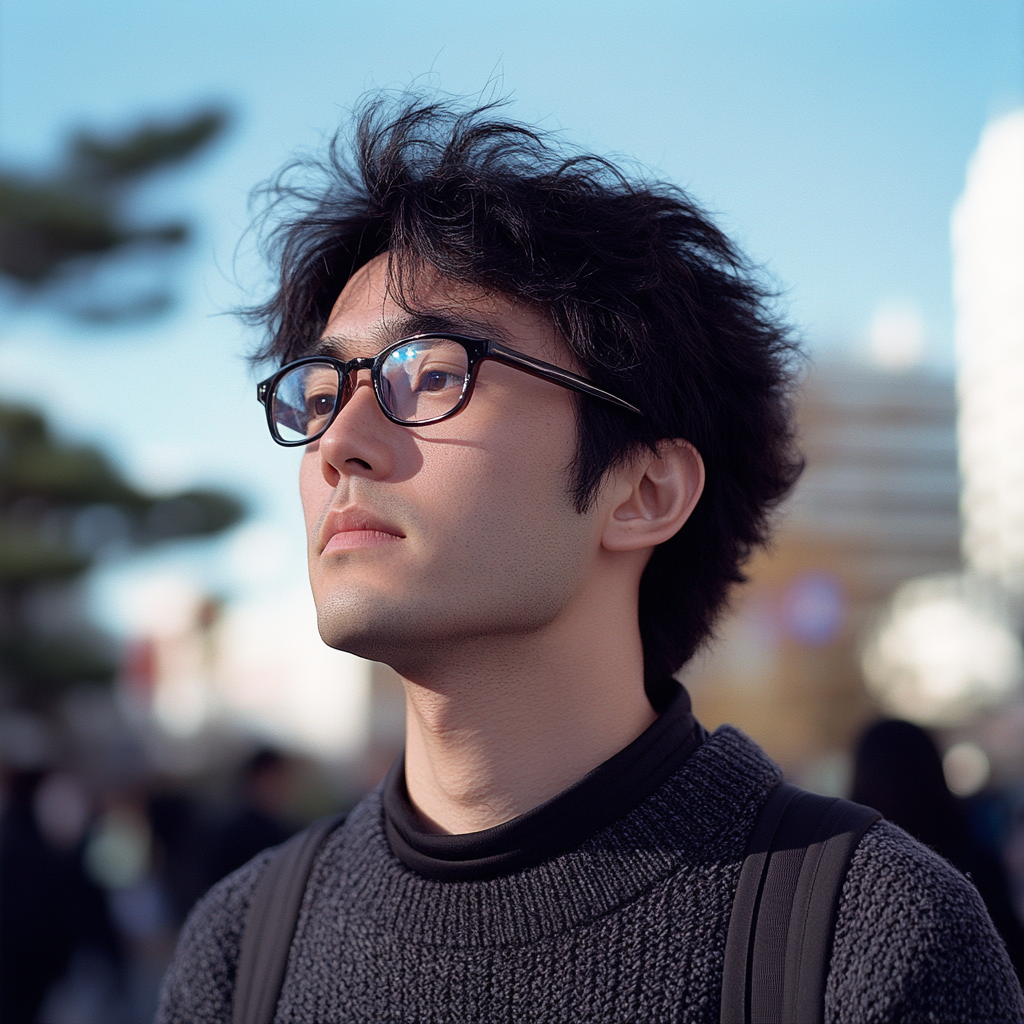
Caption of Haruto Sato
Hey, hope you’re having an amazing day!
Ah, you know, today was an absolute whirlwind of inspiration and creativity! I went to that lecture at Korea University with Ji-won. You remember how we were discussing the fusion of environment and urban life last week, right? Well, this was like plunging headfirst into a treasure of ideas. The theme of sustainable design intertwined beautifully with culinary traditions—it was like discovering a new dimension in both architecture and cuisine.
Picture this—an auditorium buzzing with brains that see the world not just in blueprints, but in narratives that preserve culture while pushing boundaries. The speaker painted a landscape where urban sprawl doesn’t swallow tradition but nurtures it, and it just clicked, you know? The parallels with culinary arts were striking. I found myself jotting notes feverishly, comparing cityscapes to ingredient harmony. Each insight was a possibility waiting to unfold—a symphony urging us to think beyond.
I couldn’t help but nudge Ji-won with ideas about collaborative projects—we’re visualizing green cities that celebrate street food with high-tech urban farming solutions, all while respecting the soul of traditional dishes. Imagine kiosks amidst lush greens, serving family-recipe kimchi crafted with vertically grown, heirloom grains. Exciting potential, isn’t it?
And then, there was the calligraphy escapade earlier today—seriously, what a glorious blend of precision and creativity! The tranquility of the museum was a stark contrast, yet harmonized with the urban dynamics we discussed later. The strokes of the brush began to reflect the ebb and flow of my culinary creations. I found a profound sense of rhythm, not unlike the layered process of bringing a dish from thought to plate. You know what I’m talking about—that sense where art and cooking overlap, each brushstroke or flavor note telling its own story.
I’ve been mulling over incorporating these artistic techniques into my new book project, bridging calligraphy’s subtleties with the compositional nature of gastronomic storytelling. Master Sung’s guidance, gentle yet firm, reminded me of those lessons from my grandmother—patience, balance, and meticulous attention that make even the simplest things an extraordinary experience.
Did I mention Heejin and I had an architectural study walk at Dongdaemun Design Park? The structures there… they are like living, breathing manifestations of bold imagination. It’s like stepping into a world where past, present, and future are in a constant dance. My camera couldn’t stop clicking! Funnily enough, every photo felt like it needed a headline from an editorial I’ll write one day. The architecture, much like a well-planned meal, had depth, and guided our conversation just like old friends reminiscing about shared flavors.
Heejin, with her fashion-forward vision, was an incredible partner—she saw design threads I didn’t. We stood there, trading perspectives, veering into how those visual dynamics could translate into our respective fields. I swear, it was as if creativity was a dish we were concocting right there in the open.
And all this—calligraphy, architecture, sustainable ideas—it’s like a creative canvas poised to redefine what we can achieve when talents converge. It makes you reevaluate everything, from culinary techniques to life itself. I’ll tell you more when we next chat—it’s like having strings of thought waiting to unravel.
Oh, and you won’t believe this—I’m still riding the wave of inspiration from that afternoon stroll in Dongdaemun with Heejin. It’s absurd how a simple walk can unleash this cascade of ideas. Each time we paused, faced with those architectural wonders, I was struck by how effortlessly they communicated a sense of place, much like how a perfectly simmered broth can evoke warmth and comfort. These city structures were like music, each playing a different note in the grand orchestra of the city.
Heejin and I bounced around so many ideas—it’s like our creativity was in sync. There was this moment, standing in the shadow of a twisting tower, that I suddenly saw a direct line between dish plating and architectural flow. You know how a dish can guide your senses step by step, revealing flavors gradually? Buildings can do that too, drawing your eye along their lines and textures. I swear, every curve and corner held a whisper of potential for translating into a culinary experience.
Oh! Speaking of culinary adventures, I almost forgot to mention what happened at the Korea University lecture—by the way, the ambience there was just hypnotic. You remember Ji-won mentioned a speaker who’d tie sustainable architecture with food culture? They illustrated delightful scenarios where modern urban designs integrate eco-friendly food production systems. Envision city spaces, park-like rooftops overflowing with veggies and herbs, elevating pesticide-free produce right above the hustle of the streets. Its ingenious simplicity felt akin to the layers of flavors in a well-crafted bibimbap.
The talk inspired a whirlwind of ideas with Ji-won afterward. We couldn’t stop ourselves—we started mapping out partnerships where street food vendors might weave these emerging urban farming practices into their operations. Imagine vibrant pop-up kitchens, powered by smart tech, yet remaining rooted in tradition. It’s not just about revolutionizing food supply—it’s about harmonizing innovation with heartfelt tradition.
Everything we discussed felt like mingling new and old—a modern urban farmer’s market infused right into the towering visuals of Seoul. And yes, your mind gets caught up dreaming of the possibilities, doesn’t it?
Oh dear, I realize I might be rambling on a bit, but isn’t it wonderful when these different threads—architecture, food, artistry, calligraphy—all weave together so seamlessly? I find there’s this relentless urge to mix them into something that stands both as traditional yet timelessly new. It’s exactly like my endless quest for the ultimate dish—rooted in family flavors but looking towards tomorrow.
But tell me, amidst all this excitement and the whirl of different conversations today, what have you been scheming up in your neck of the woods? I’m certain you’ve got some grand revelations of your own; after all, creative minds think alike, don’t they? And before I forget, that tea suggestion you made was perfect—a little moment of calm amidst this creative storm.
You know, that architectural lecture was truly fascinating—I never realized how apt the analogy between designing spaces and crafting a dish could be! It struck me particularly during this one segment where they showed a blueprint of a green building, envisioning entire cities as culinary masterpieces. Imagine skyscrapers as towering stacks of ingredients, carefully layered, with each level bringing its own unique flavor to the mix.
And it wasn’t just theory; there were actual designs modeled after traditional marketplaces with integrated farms. As they discussed, I couldn’t help recall the vivid imagery of street food stalls, the aroma beckoning like age-old recipes coming alive in steel and glass! It’s like creating an extended family table out of urban chaos, with food and architecture combining like a choreography of flavor and form.
Not to mention, Ji-won and I are completely enamored by the interplay of these concepts. It’s rare to have this sort of intellectual camaraderie. We started brainstorming right there! Imagine interdisciplinary workshops where architects, chefs, and cultural historians collaborate—they could actually amplify each other’s work. Though, side note, Ji-won did tease me about my constant note-taking obsession; apparently, my scrawlings are reminiscent of an artist caught mid-performance!
Oh, speaking of catching moments, earlier today at Dongdaemun Design Park with Heejin, I took a series of photographs that I think will form the backbone of my next culinary-inspired essay. Each snap told a story, or rather, hinted at the melodious connection between structure and soul—something like pairing a dish with its narrative lineage. Heejin herself was quite taken by the thought of fashioning garments that match the architectural rhythm we captured.
Wouldn’t it be intriguing if fashion, food, and architecture held a symposium? Imagine the rich textures, vibrant colors, and expressive scents merging on a single stage. It’s visions like these that make days like today so exhilarating. The potential of transforming any form into sensory language keeps my energy thrumming with excitement! I do wonder, though, if I wander too far sometimes, but it seems right…
And you know, linking calligraphy and cooking has this vastly rewarding element to it too. The contrast between the open, bold strokes on canvas and the subtle, layered flavors in a dish brings about an incredible balance. Master Sung at the museum offered such profound insights into the harmony that’s as vital in writing as it is on a plate. Imagine writing a recipe where each instruction becomes an art form in itself—each ingredient introduced with the elegance of an ink stroke on rice paper!
Then with that muse in mind, I found myself thinking of my grandmother again, whose kitchen was almost like her art studio. It dawned on me how the slow simmer of ideas leads to culinary compositions that embody stories, tradition, and innovation. Much like my paintings with rice flour, where each hue and line demands attention, yet beckons collective appreciation. It captivates me continually how such different worlds can coexist, but maybe that’s what makes everything we do both personal and universal.
Catch you later, dive into these thoughts with me!