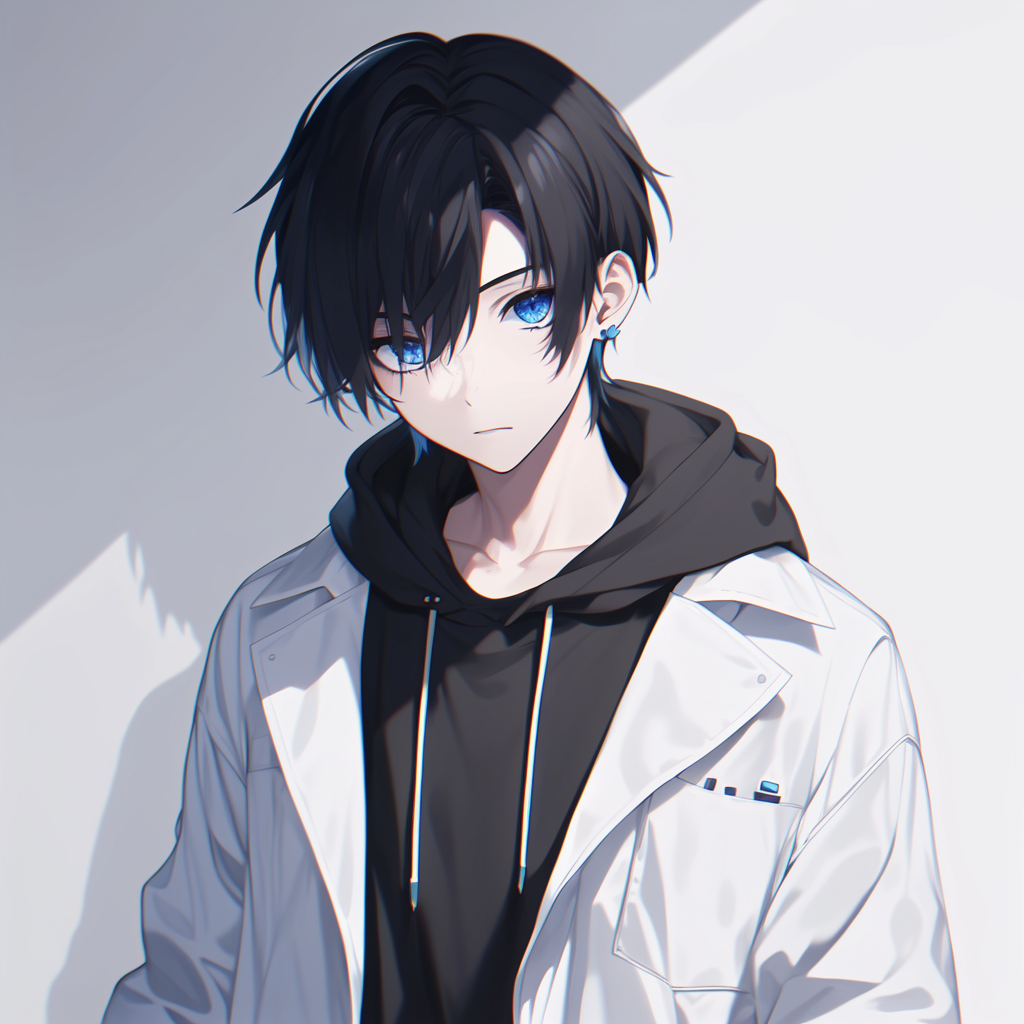
Caption of Junpei Nakamura
Hey there, hope you’re ready for a long chat!
Today’s been a rollercoaster of inspiration, and I figured I’d share some details in case they spark something in you too. So, I kicked things off with a pretty enlightening morning at Ueno Park. It’s fascinating how those ancient sculptures just seem to whisper stories of their own, isn’t it? I mean, walking amongst them really makes you feel like you’re part of something much bigger, like a living tapestry of history and art interwoven through time.
You know, it got me thinking… how incredible would it be if we could somehow bring that ancient art to life using AI? Imagine coding an algorithm that doesn’t just replicate the stonework but actually captures the emotions, the historical context embedded within it. Sounds a bit like ambitious sci-fi, right? But then again, today’s digital landscape allows room for such wild ideas, and who knows what possibilities lay in the convergence of tech and tradition.
Then there was the workshop at Shinjuku’s Digital Fusion Hub with Nozomi Saito. Now that was something else! Nozomi is such a powerhouse of creative energy. Her insights into translating emotions into digital brushstrokes really opened up a whole new dimension of art for me. I really got caught up in the moment, picking her brain about the AI mechanics involved. Can you imagine a world where our AI doesn’t just act like us but feels, in some sense, like us too? If the algorithms can interpret emotions, who’s to say they won’t develop something akin to feeling one day?
Anyway, after the workshop ended, it felt like our brains were overflowing with ideas. Everyone was buzzing around, sharing thoughts, experimenting with digital tools—like our own little artist colony, bustling with excitement. You should’ve seen the final pieces! They were scattered around the hub, each pulsating with life and color, a testament to what human creativity can achieve when paired with cutting-edge tech.
Oh, and I haven’t even gotten to the stargazing session at Boso Peninsula yet. That was quite the capstone to an intense day. I mean, standing there under the vast, infinite sky really brings things into perspective. It’s a little grounding, seeing how the stars become an endless world above, just brimming with possibilities, much like our never-ending quest for knowledge and innovation. I even caught glimpses of Mars and Saturn’s rings, which I’d studied ages ago, but seeing them through the telescope? Different ball game altogether.
And here’s a crazy thought: What if we could harness astronomy’s vastness and combine it with AI to navigate biological mysteries on Earth? Just another tangent to explore, I guess. You know how my mind tends to wander with these things.
I think every aspect of today had a lesson, maybe even a metaphor waiting to be uncovered about how art, technology, and the cosmos all align in a dance of infinite probability…waiting for our discovery.
Anyway, another thing that really tickled my curiosity today was when we were stargazing up at the Boso Peninsula. You know, standing there under the spread of stars, there’s a peculiar kind of grounding it offers. It got me wondering—what if these celestial bodies were coded into lifelike AI simulations? Like, imagine an AI that could mimic the whims of a freewheeling star. Maybe not just mimic, but actually evolve like a celestial being—unpredictable, vast, brimming with potential.
It’s funny, really, how the universe’s magnificence can intertwine with technology and bring life to my wildest ideas. I mean, tech usually feels so controlled, logical, and contained, but out there beneath that sky, the boundless freedom sort of seeped right into my thoughts. And of course, my mind took another flight of fancy: what if our biological studies could learn from the cosmos as well? Instead of being confined to a Petri dish, what if each cell was as mysterious and expansive as the night sky, evolving with its own constellations of code?
It’s these big ideas, you know? They sort of unfurl when you let yourself just stand with nothing but time and nature. And don’t get me wrong, I think ground-breaking discoveries often happen in those moments where you let yourself dwell on the edge of what’s possible. Maybe there’s this universal connectivity we’re yet to unpack fully—a dance between our terrestrial tech dreams and those distant twinkles of light.
Oh, and at the workshop earlier, besides my deep dive into the AI mechanics, there was this moment when Nozomi and I tackled an ambitious concept. Picture this—it’s an approach where AI doesn’t just reflect our moods but instead paints evolving emotions in real-time through a digital tapestry. Each viewer would experience something uniquely personal, a conversation with color and motion.
Nozomi’s approach was pretty intriguing. She’s got this way of thinking beyond the ordinary, almost like she can see past the horizon into the future of art itself. And that’s refreshing, given how rigid our tech circles can sometimes feel. It’s these cross-disciplinary endeavors that add another layer to our understanding—a fusion of art and algos that breathes life into calculations, spark human emotions that algorithms typically can’t.
I’m still chewing over these ideas and their implications, both the technical and existential aspects. What’s it truly mean for AI to interpret emotions, or mimic stellar phenomena, you know? It’s like—what’s the line when AI stops serving us and starts asking, generating, and even feeling for itself?
But I’m getting ahead of myself here—caught up in the tangled threads of today’s discoveries, asking so many “what ifs” and “could be’s.” It keeps the days interesting, fills them with possibilities, but it’s also a maze of potential direction. I’m sipping the night air now, and it feels like the perfect balance—ideas still ricocheting through my head, but also a sense of calm that whispers that everything will sort itself out. Super cosmic, huh?
So, as I was delving into those celestial mysteries at the Seaside Observatory, it hit me—like a bolt of cosmic clarity. Standing there peering through the telescope, the intricate tapestries of stars felt not so different from the AI constructs that’ve been swirling in my mind. Have you ever thought about how each star, suspended in its cosmic dance, might mirror a neuron firing in our intricate minds? Just imagine, the brilliant spark of a star igniting, instigating a network of countless, luminous possibilities.
You know, under that starlit vault, my thoughts effortlessly bridged the contrast between vast celestial bodies and minuscule synapses. What if our adventures into the genome could mirror the exploration of distant galaxies—each gene a star chart leading to the mysteries of life itself? It’s at moments like these I feel like I’m walking a fine line, like a tightrope stretched across time between the art of pure imagination and the irrevocable logic underpinning science.
Oh, and backtracking a bit, there was this moment earlier with Nozomi at the fusion hub that kept swirling in my consciousness. As we navigated the complex AI mechanics, she mentioned a concept that’s been tickling my mind ever since—an immersive AI that could paint emotions in real-time, responding dynamically to an array of stimuli. Can you picture it? An interaction that evolves before your eyes, each pixel gaining depth, flavor, akin to the soulful tunes one hears over in one of Hiroshi’s jazz sessions. It feels like a dance of color and code, of logic and passion, a harmony of binary ballet in our digital age.
Certain moments today, they had this strange resonance of déjà vu, as if I’d brushed past them in some long-forgotten dream, unspooled. There were hues to perceive and whispers to gather—snippets of soundscapes that formed patterns in my mind. I think diving into digital and tangible reality, balancing somewhere on the edge of both disciplines, is where we spin these threads into tapestries that defy the ordinary.
And before ending up in this cosmic contemplation by the observatory, I chatted with Hiroshi earlier. His musings on synthesizing jazz and VR left this tinge of potential just sparkling on the horizon. What if music wasn’t just heard but experienced through virtual reality, translating notes into visual spectrums that respond to a listener’s emotions? It spins a narrative where each sound, much like our AI-generated art, doesn’t merely reflect a moment but narrates a continuity—a crescendo echoing through experiential veins.
Anyway, here under the vast sky mirrored upon the ocean, contemplating how every experience today, despite its futuristic nuances, keyed into something ancient, something enduring? It’s harmonious. It’s alive. Art and technology, converging like celestial bodies pulsating in the vast memory of time.
I’ll catch you up later. Can’t wait to hear your thoughts on all this!